




Feeding your 8 to 9 months old baby can feel like a puzzle. You want to make sure your little one gets the right nutrients, at the right times, without any fuss.
But how do you create a feeding schedule that fits your baby’s needs and your busy life? This guide will help you understand exactly what your baby needs during this crucial stage. By the end, you’ll have a clear, simple plan that keeps your baby happy, healthy, and growing strong.
Ready to make feeding time easier and more enjoyable? Let’s dive in.
At 8 to 9 months, babies reach important feeding milestones. Their eating habits change quickly. This stage helps build skills for eating solid foods. Parents see new behaviors and needs in mealtime routines.
Babies begin to explore different textures and tastes. They start learning how to feed themselves. This period is key for developing good eating habits. Caregivers must watch closely and support their baby’s progress.
Babies still need breast milk or formula. But they also start eating more solid foods. This mix gives them energy and nutrients. Solid food textures change from purees to mashed or soft chunks. It helps babies learn to chew and swallow.
Parents can offer small portions several times a day. It is normal if the baby eats less solid food at first. Milk remains the main source of nutrition during this time.
Finger foods encourage self-feeding skills. Babies use their fingers to pick up soft foods. Soft cooked vegetables, small fruit pieces, and cheese work well. This practice improves hand-eye coordination and fine motor skills.
Supervise closely to avoid choking risks. Let the baby explore tastes and textures at their own pace. Finger foods make mealtime fun and interactive.
Babies show signs when they feel hungry or full. Watch for lip smacking, reaching for food, or fussiness. Turning the head or pushing food away means they are full. Responding to these cues helps build trust.
Offering food only when the baby is hungry supports healthy eating habits. Avoid forcing them to eat more than they want. Respecting hunger signals creates a positive mealtime experience.
Feeding an 8 to 9-month-old baby requires a balanced approach to meal frequency. At this age, babies explore new tastes and textures. Regular meals help meet their growing energy needs. They also build healthy eating habits early on. A well-planned schedule supports digestion and prevents fussiness.
Babies at this age usually eat three main meals daily. These include breakfast, lunch, and dinner. Each meal should have a mix of solids and milk or formula. Milk remains important for nutrients and hydration. Solid foods introduce new flavors and textures.
Some babies may take small portions at the start. Gradually, they eat more as they get used to solids. Watch your baby’s hunger cues. Avoid forcing them to finish if they seem full. Consistency helps maintain energy and growth.
Two snacks per day suit most 8 to 9-month-olds well. Offer snacks mid-morning and mid-afternoon between meals. Snacks keep energy steady and avoid hunger tantrums. Choose soft fruits, small pieces of cooked veggies, or teething biscuits.
Snacks should be easy to eat and digest. Avoid sugary or salty options. Fresh fruits like bananas or avocado pieces work great. Keep snacks small to encourage appetite for main meals. Snacks add variety and keep babies happy.
At 8 to 9 months old, milk remains a vital part of your baby’s diet. It provides essential nutrients and hydration. Babies usually drink breast milk or formula alongside solid foods. Understanding the right milk and formula intake supports healthy growth and development.
Continue breastfeeding on demand, about 3 to 4 times daily. Each session may last 10 to 15 minutes. Breast milk offers antibodies that protect your baby from illnesses. Watch for hunger cues like sucking or fussiness. Breastfeeding supports bonding and emotional comfort.
Offer about 24 to 32 ounces of formula daily. Divide this into 4 to 5 feedings. Use iron-fortified formula for proper nutrition. Warm the bottle slightly but avoid overheating. Keep bottles clean to prevent bacteria growth. Follow your baby’s appetite and avoid forcing feedings.
Avoid cow’s milk before 12 months old. It lacks necessary nutrients and may cause digestive issues. After one year, introduce whole milk gradually. Start with small amounts mixed with breast milk or formula. Watch for any allergic reactions or tummy troubles. Consult your pediatrician before the switch.
Choosing the right foods for an 8 to 9 months old baby is key to healthy growth. This stage needs a mix of nutrients. Babies explore new tastes and textures. Parents can offer a variety of foods. These foods support brain development and energy needs. Here are the best foods to include in your baby’s diet.
Vegetables and fruits provide vitamins and minerals. Soft cooked carrots, peas, and sweet potatoes are gentle choices. Mashed bananas, pears, and apples are sweet and easy to digest. These foods help build strong immunity. They also support digestion and give natural energy.
Proteins help build muscles and repair cells. Good options include pureed chicken, turkey, and lentils. Eggs are also a great protein source. Grains like oatmeal, rice, and small pasta pieces provide energy. These foods keep your baby active and growing.
Healthy fats support brain and eye development. Offer small amounts of avocado and full-fat yogurt. A little olive oil can be mixed into vegetables. These fats help absorb vitamins and keep skin healthy. They are important for overall growth and energy.
Creating a feeding schedule for your 8 to 9 months old baby helps build healthy habits. It supports their growth and development. A clear routine makes mealtime smooth and less stressful for both baby and parents.
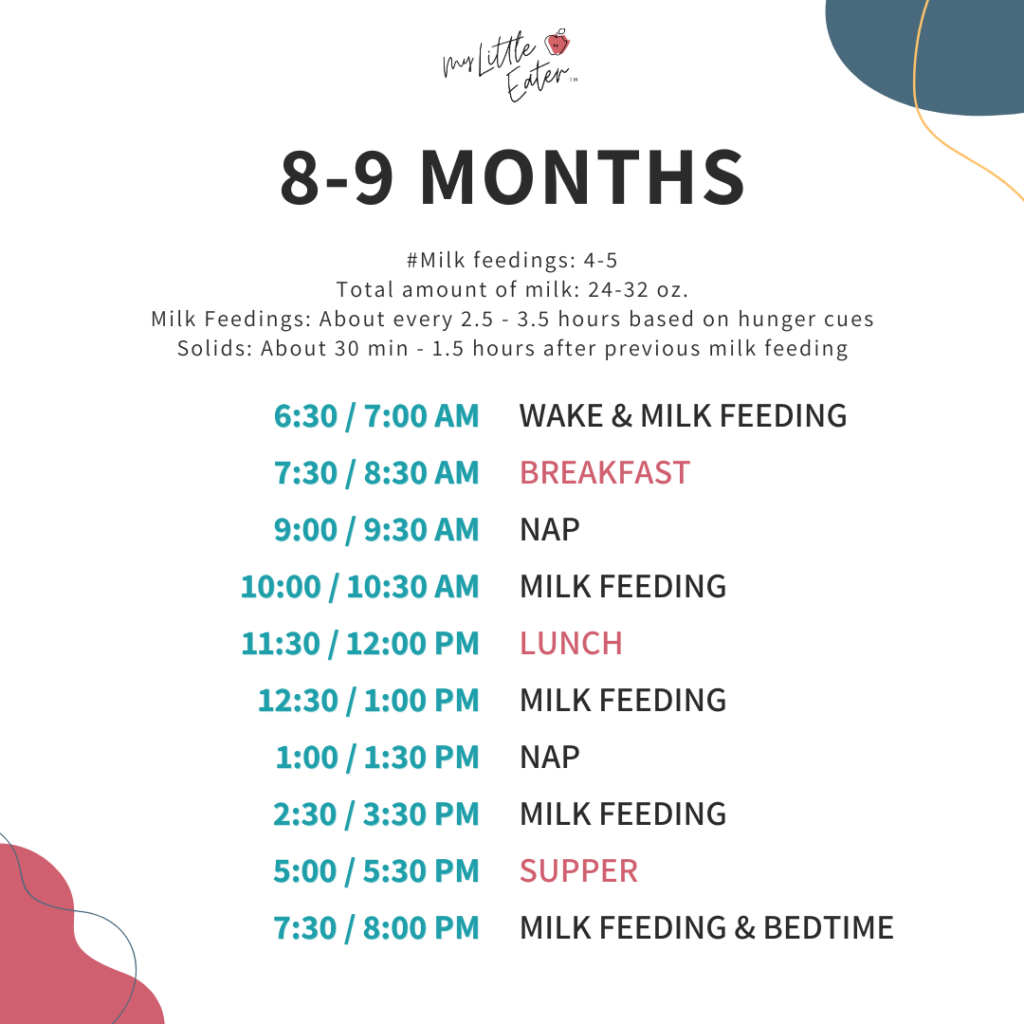
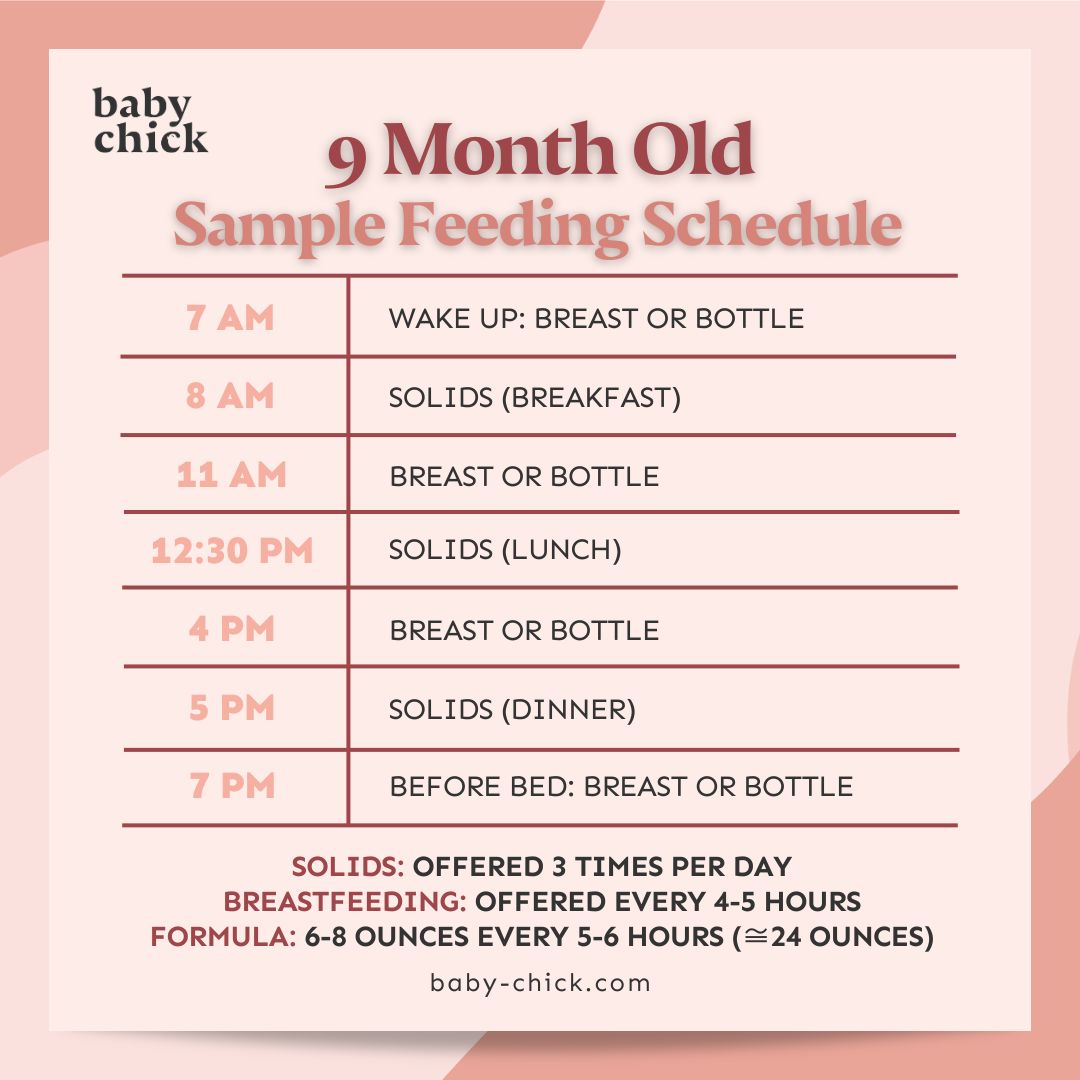
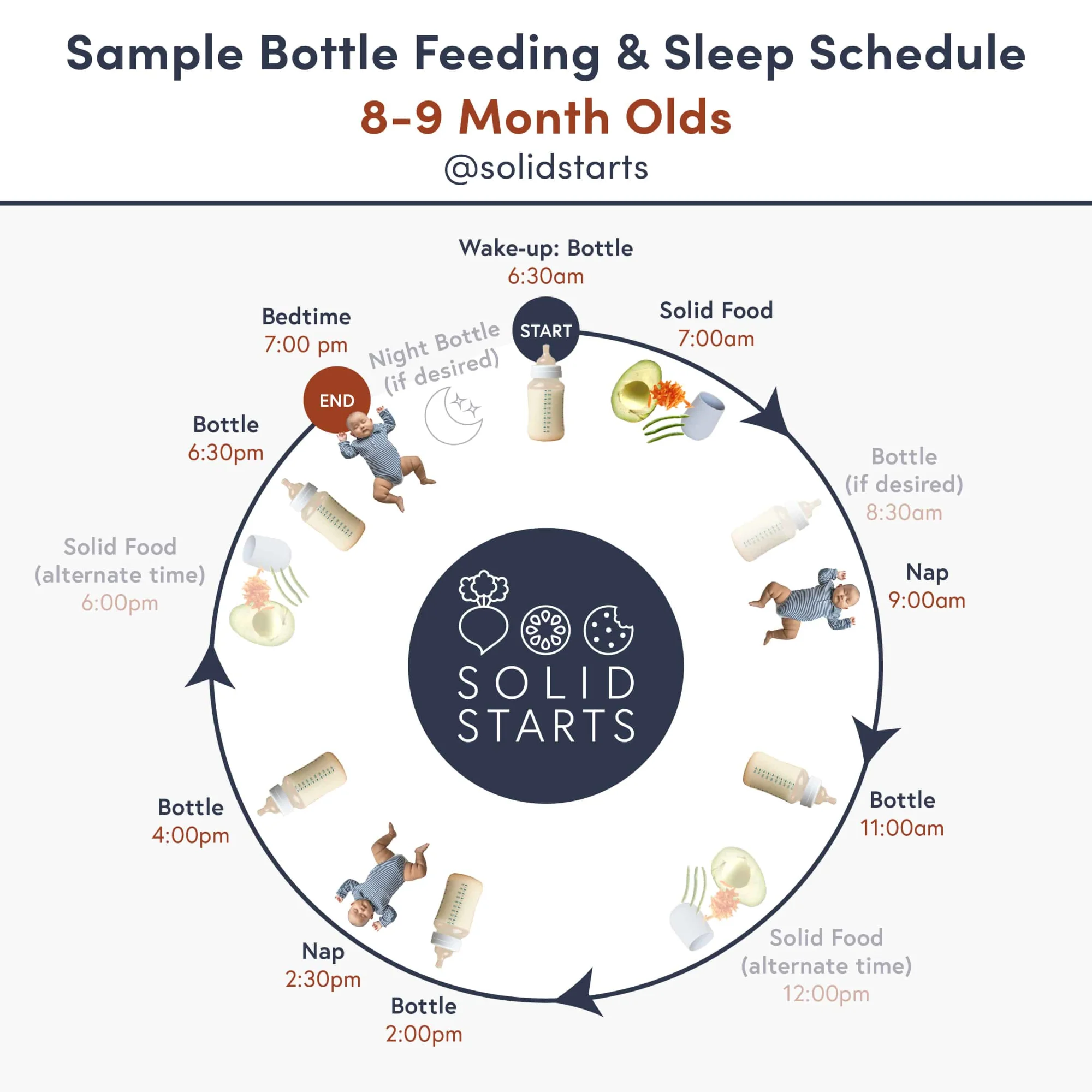
Here is a simple sample feeding schedule. It balances breast milk or formula with solid foods. This guide offers ideas for each part of the day.
Start with breastfeeding or a bottle of formula. This gives your baby important nutrients and energy.
After milk, offer a small serving of solid food. Try soft fruits like mashed banana or cooked apple.
Introduce iron-rich cereals or pureed vegetables. These help with your baby’s growing needs.
Begin with a milk feeding session. It keeps your baby hydrated and satisfied.
Follow with a mix of vegetables and proteins. Soft cooked carrots, peas, or lentils work well.
Try finger foods like small pieces of soft fruit or cooked pasta. This encourages self-feeding skills.
Offer breast milk or formula again before dinner. It helps your baby feel full and calm.
Serve a light solid meal. Pureed sweet potatoes or mild mashed vegetables are good choices.
End the day with a final milk feed. This soothes your baby before sleep.
Allergy awareness is very important for babies aged 8 to 9 months. This is the age when new foods are introduced. Parents must watch closely for any signs of allergies. Early detection helps keep babies safe and healthy.
Introducing foods slowly and one at a time is best. This way, it is easier to spot which food may cause a reaction. Careful observation during feeding times makes a big difference.
Some foods cause allergies more often than others. Common allergens include milk, eggs, peanuts, tree nuts, soy, wheat, fish, and shellfish. These foods may cause reactions in sensitive babies. Introducing these foods carefully is key to avoid problems.
Food reactions can show in many ways. Look for rash, swelling, or redness on the skin. Babies might cough, wheeze, or have trouble breathing. Vomiting or diarrhea can also be signs. If any of these appear, stop the food and call a doctor.
Encouraging healthy eating habits in babies aged 8 to 9 months is important. This stage shapes their food preferences and eating skills. Parents can help by creating good routines and a happy eating space. Simple tips support babies in trying new foods and enjoying mealtime.
Make mealtimes calm and pleasant. Use a quiet space without distractions like TV or toys. Sit with your baby to show eating is a shared activity. Smile and talk gently to keep them relaxed. Offer food in small, manageable pieces. Let your baby explore food with hands and mouth. This builds comfort and interest in eating.
Picky eating is common at this age. Introduce new foods slowly alongside familiar favorites. Don’t force your baby to eat. Offer choices and let them decide how much to eat. Stay patient and keep trying with different textures and flavors. Praise small successes to encourage positive feelings. Avoid pressure, so mealtime stays a positive experience.
At 8 to 9 months, babies typically eat three meals and two to three snacks daily. Breast milk or formula remains essential. Introduce solid foods gradually, including purees and soft finger foods, ensuring balanced nutrition and consistent meal times for healthy growth and digestion.
Babies aged 8 to 9 months generally have three main meals and two to three snacks daily. This includes breast milk or formula feedings combined with solid foods. Regular feeding intervals help establish a routine and support the baby’s nutritional needs and development.
Soft purees, mashed vegetables, fruits, cereals, and small pieces of soft finger foods are ideal. Include iron-rich foods like pureed meats or legumes. Avoid choking hazards and highly allergenic foods unless advised by a pediatrician. Always supervise during mealtime for safety.
At 8 to 9 months, babies typically consume 24 to 32 ounces of breast milk or formula daily. This complements solid foods and meets hydration and nutrition needs. Amounts may vary based on the baby’s appetite and growth rate.
Feeding your 8 to 9-month-old baby well helps them grow strong. A good schedule keeps meals balanced and regular. Offer a mix of foods to try new tastes and textures. Watch your baby’s cues to know when they are full or hungry.
Patience and consistency make feeding times easier for both of you. This stage builds healthy eating habits for the future. Keep meals simple and safe. Enjoy this special time with your little one.


