




Feeding your baby between 6 to 7 months old can feel like a big challenge. You want to make sure your little one gets the right nutrition to grow healthy and strong.
But how do you know when and what to feed? What’s the best schedule to keep your baby happy and satisfied? In this guide, you’ll discover a simple, easy-to-follow feeding schedule that fits your baby’s needs perfectly. Keep reading to unlock the secrets of smooth mealtimes and confident parenting!
Babies grow fast at 6 to 7 months. Their feeding habits change a lot. This time is important for starting solid foods. It also helps them learn new tastes and textures.
Parents watch closely for signs that show the baby is ready. The feeding schedule changes from only milk to a mix of milk and solids. This stage builds strong eating skills and nutrition habits.
Babies show clear signs they are ready for solid food. They can sit up with little help. Their head control is good and steady. They show interest in food by watching others eat. Babies open their mouth when food comes near. They can move food to the back of the mouth and swallow. These signs show they can handle more than milk now.
Start with small amounts of soft, pureed foods. Continue breast milk or formula as the main source of nutrition. Introduce one new food at a time to check for allergies. Offer solids once or twice a day at first. Gradually increase the amount and variety of foods. This helps babies enjoy different tastes and textures. Milk remains important for growth and hydration.
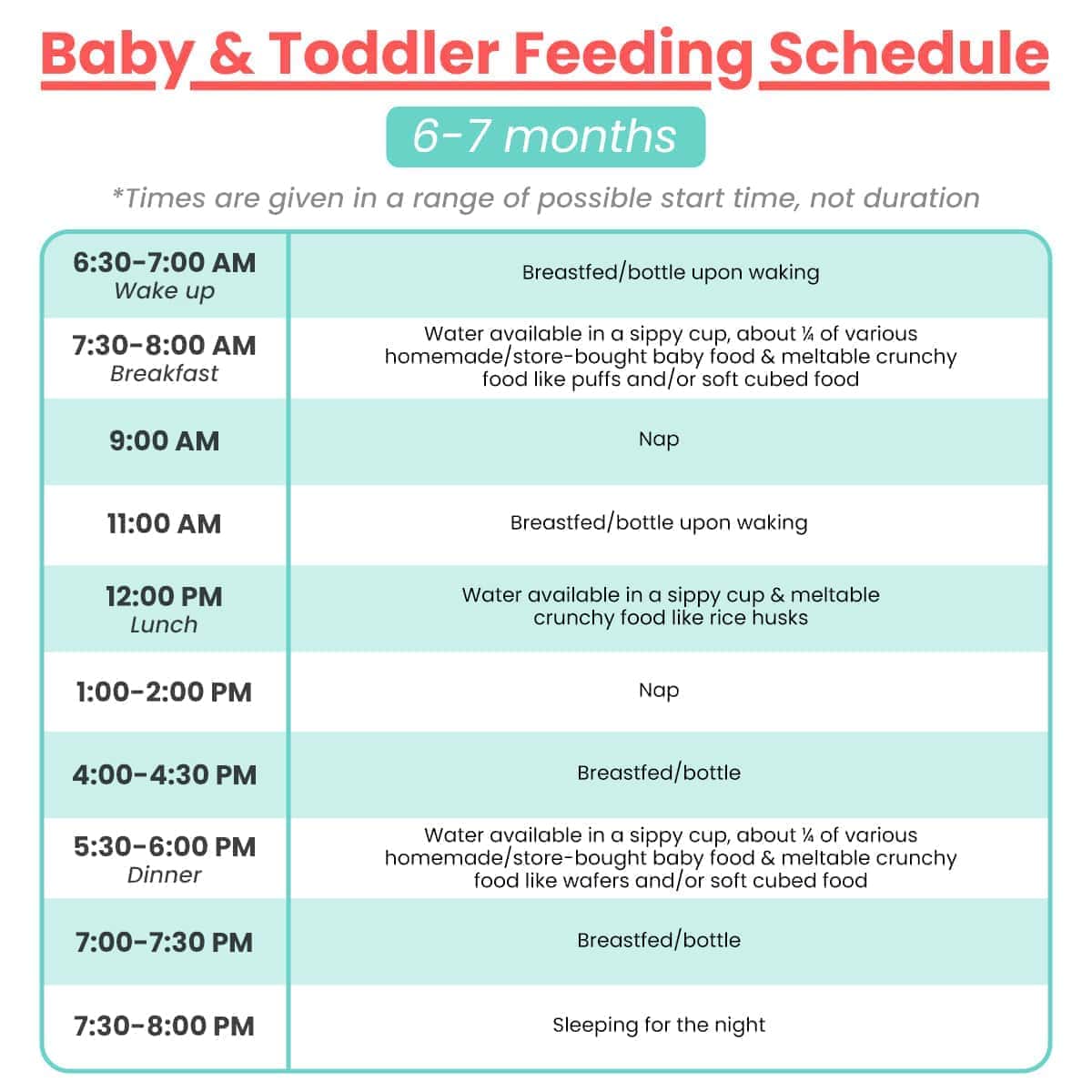
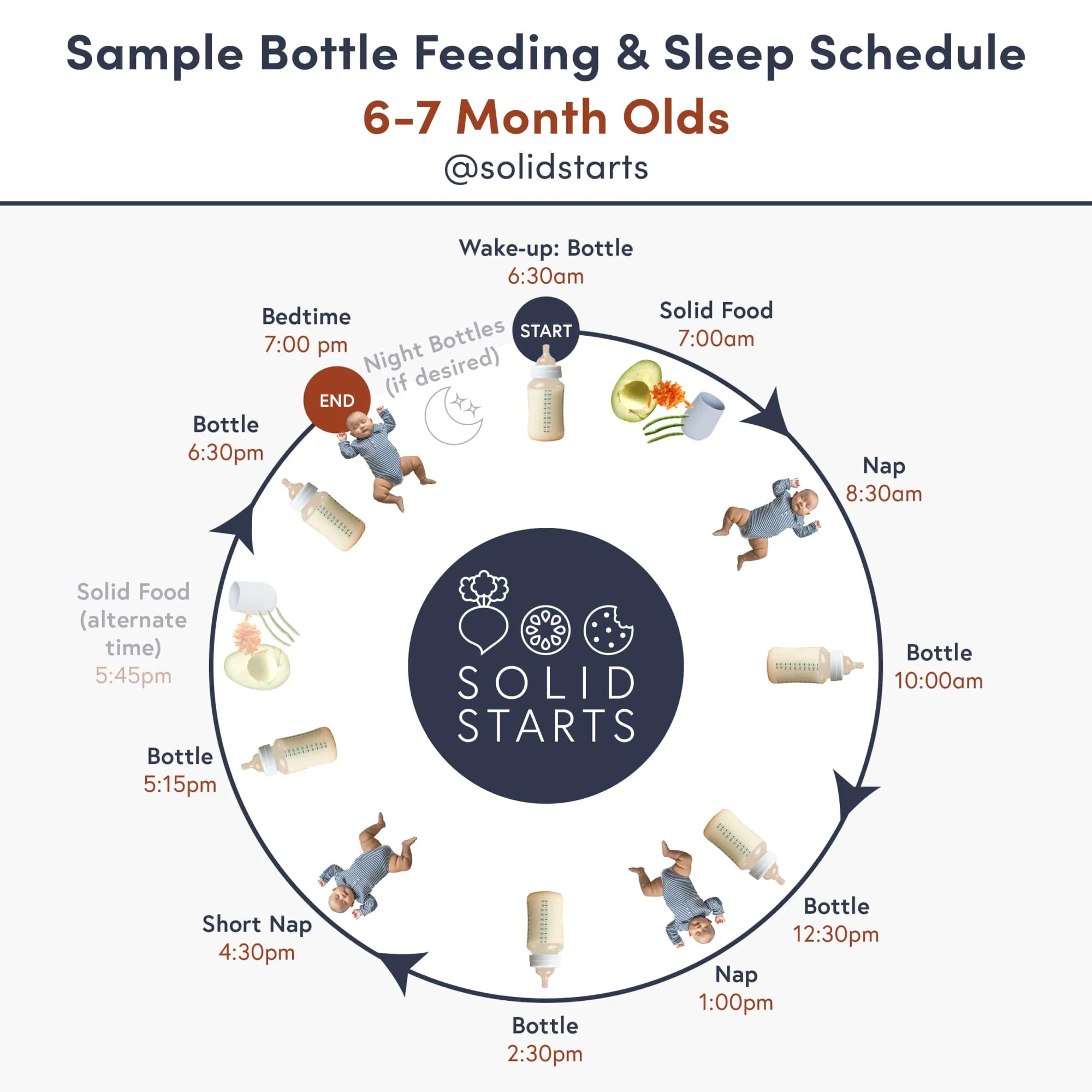
Establishing a daily feeding routine is important for babies aged 6 to 7 months. This routine helps babies get the right balance of milk and solid foods. It supports their growth and keeps them happy and healthy. Consistency in feeding times also builds a sense of security for your baby. Understanding how many meals and snacks to offer, along with the right milk feeding frequency, creates a smooth daily rhythm.
At 6 to 7 months, babies usually eat two to three solid meals each day. These meals include pureed fruits, vegetables, and cereals. Snacks can be small portions of soft finger foods or mashed fruits. Offer snacks once or twice daily, depending on your baby’s appetite. Keep meal and snack times spaced out to avoid overfeeding. Watch your baby’s cues for hunger and fullness.
Milk remains a key part of your baby’s diet. Breast milk or formula should be offered about four to five times daily. Each feeding gives your baby important nutrients and hydration. Milk feeds can happen before or after solid meals. Babies might drink less milk as they eat more solids. Always let your baby guide the amount of milk they need.
Introducing new foods to a baby at 6 to 7 months is an exciting time. It helps build good eating habits early. Choosing the right foods supports growth and development. Start with gentle textures and flavors. Gradually add variety to keep meals interesting. Focus on nutrition and safety for your little one.
Purees are perfect first foods for babies. They are easy to swallow and digest. Use vegetables like carrots, sweet potatoes, and peas. Fruits such as apples, pears, and bananas work well too. Cook vegetables until soft, then blend until smooth. Avoid adding sugar or salt. These purees provide essential vitamins and minerals. They help strengthen your baby’s immune system.
Finger foods encourage self-feeding and hand-eye coordination. Choose soft, small pieces that your baby can hold. Examples include ripe avocado chunks, soft cooked carrots, and small pieces of banana. Avoid hard or small foods that can cause choking. Always supervise your baby while eating. Finger foods help develop chewing skills and independence at mealtime.

Feeding a 6 to 7-month-old baby requires attention to portion sizes and serving tips. Proper portions help ensure your baby gets enough nutrition without wasting food. Serving the right amount also supports healthy growth and eating habits.
Babies at this age are learning to eat solids alongside breast milk or formula. Start with small amounts and increase gradually. Watch your baby’s cues to understand their hunger and fullness.
Offer about 2 to 4 tablespoons of food per meal. This amount suits most babies starting solids. Serve solids two to three times daily. Continue giving breast milk or formula as the main drink.
Introduce one new food at a time. Check for any allergies or reactions. Increase portions slowly as your baby shows interest and appetite.
Stop feeding when your baby turns away or closes their mouth. These signs show they are full. Avoid forcing your baby to finish all the food.
Respect your baby’s signals. Overfeeding can cause discomfort and poor eating habits. Let your baby guide the pace of eating. This helps build a positive mealtime experience.
Babies aged 6 to 7 months need regular water along with breast milk or formula. Small sips help keep them hydrated between meals. Offering water in a cup encourages healthy drinking habits early on.
At 6 to 7 months old, babies start to need water along with breast milk or formula. Water helps keep your baby hydrated, especially as they begin eating solid foods. Small sips of water are enough for now. Too much water can fill their tiny stomach and reduce milk intake. Use a small cup or a bottle for giving water. Offer water during or after meals to make it a habit.
Watch your baby’s signs to know if they are well hydrated. Wet diapers are a good indicator. At least six wet diapers a day means your baby is drinking enough. The urine should be light yellow, not dark. Your baby’s skin looks soft and elastic, not dry or tight. They are alert and active, showing no signs of tiredness or fussiness. These signs show your baby is getting enough fluids daily.
At 6 to 7 months, babies try many new foods. Parents must watch for allergies carefully. Early signs can be subtle but important. Knowing what to expect helps keep babies safe.
Allergy awareness means understanding which foods might cause reactions. It also means introducing these foods in a safe way. This helps reduce the risk of serious problems. Careful steps build a healthy eating routine.
Some foods cause allergies more often than others. These include eggs, milk, peanuts, tree nuts, fish, shellfish, wheat, and soy. Parents should watch for rashes, swelling, or breathing trouble. Digestive issues like vomiting or diarrhea may also appear. Keep a close eye during and after meals.
Start with small amounts of one allergenic food at a time. Wait three to five days before trying another new food. Watch for any allergic reactions during this time. Offer foods in a soft, easy-to-swallow form. Consult your pediatrician before starting allergenic foods. This approach helps spot allergies early and keeps your baby safe.
Feeding a 6 to 7 months old baby can bring some challenges. Many parents face common issues like food refusal or digestive troubles. These problems can be frustrating but are often normal steps in your baby’s growth. Understanding how to handle these challenges helps make feeding time easier and more pleasant.
Babies may refuse food for many reasons. They might be full, tired, or just not ready for a new taste. Keep offering the same food several times. It can take many tries before a baby accepts it. Try changing the texture or temperature of the food. Sometimes, mixing new foods with familiar ones helps too. Stay calm and patient. Forcing food can create negative feelings around eating.
Digestive problems like gas, constipation, or diarrhea are common. These can make babies uncomfortable and fussy. Offer small, frequent meals instead of large ones. Make sure your baby is drinking enough fluids. Gently massage their belly or move their legs in a cycling motion to ease gas. Avoid foods that often cause discomfort, such as too much fruit juice. If problems last, consult your pediatrician for advice.
Encouraging healthy eating habits at 6 to 7 months sets a strong foundation. Babies learn through experience. Positive habits help them enjoy food and grow well.
Simple steps make mealtime fun and stress-free. Patience and consistency guide your baby to try new foods and textures. Let’s explore practical tips to support this journey.
Keep mealtime calm and pleasant. Sit your baby in a comfortable high chair. Avoid distractions like TV or loud noises. Smile and talk softly to your baby. This helps build trust and focus on eating.
Offer small bites and allow your baby to explore food naturally. Do not rush or force feeding. Praise your baby for trying new tastes. This encourages a happy and relaxed attitude toward food.
Let your baby hold soft finger foods. This builds hand-eye coordination and independence. Use spoons with soft tips for gentle introduction. Expect messes; they are part of learning.
Allow your baby to feed at their own pace. Watch for signs of fullness or hunger. Support their efforts with gentle guidance. This fosters confidence and healthy eating habits.
Babies 6 to 7 months old typically eat 3 to 4 solid meals daily. Breast milk or formula remains essential and is fed 4 to 5 times per day.
Start with 1 to 2 tablespoons per meal, gradually increasing. Watch for hunger cues and adjust portions accordingly to avoid overfeeding.
Introduce one new food every 3 to 5 days. This helps monitor allergies and digestive reactions, ensuring baby’s safety and comfort.
Yes, offer small sips of water in a sippy cup. Water helps with hydration but should not replace breast milk or formula.
Feeding a 6 to 7 months old baby needs patience and care. Offer a mix of breast milk, formula, and soft solids. Keep mealtime calm and watch for hunger signs. Small, frequent meals work best at this stage. Always introduce new foods slowly to check for allergies.
Your baby’s eating habits will grow and change fast. Stay flexible and enjoy this feeding journey together.


