




Are you wondering how to keep your 10 to 11-month-old baby well-fed and happy throughout the day? Finding the right feeding schedule can feel overwhelming, but it’s key to your little one’s growth and mood.
In this post, you’ll discover a simple, effective feeding routine designed just for your baby’s age. Stick with me, and you’ll learn how to balance milk, solids, and snacks so your baby stays energized and satisfied—making mealtime easier for both of you.
Ready to take the guesswork out of feeding? Let’s dive in!
At 10 to 11 months, babies reach key feeding milestones. Their eating habits change quickly during this time. This stage helps build strong eating skills. It also supports their growth and development. Parents can watch for new abilities in feeding. These milestones show progress toward independent eating.
Babies start eating thicker foods now. Purees give way to soft, mashed foods. Small pieces of cooked vegetables or fruits work well. This change helps babies learn to chew. It also improves their mouth muscle strength. Offer a variety of textures to encourage interest.
Finger foods become important at this age. Babies enjoy picking up small, soft foods themselves. This helps develop hand-eye coordination. Good choices include soft cheese, small pieces of banana, or cooked pasta. Always watch closely to prevent choking. Finger foods support self-feeding skills and independence.
Understanding hunger signs helps with feeding schedules. Babies may fuss, open their mouth, or reach for food. They might also make sucking motions. Recognizing these cues prevents overfeeding or underfeeding. Responding to hunger signals builds trust and comfort. This skill guides parents in offering meals at the right time.
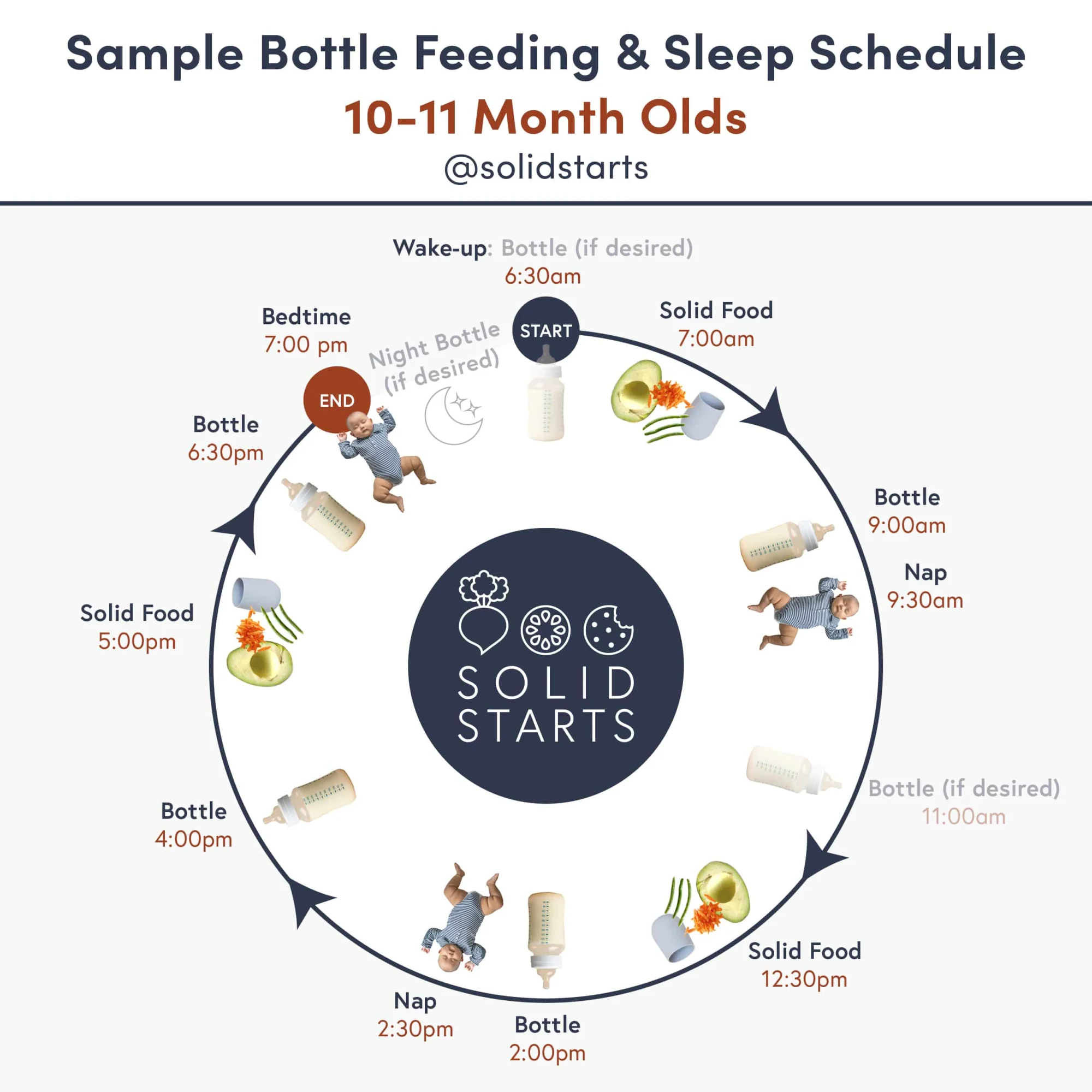
Establishing a clear daily meal structure helps your 10 to 11 months old baby get the right nutrition. Consistent meal times create comfort and routine. It supports healthy eating habits and growth.
At this age, babies explore new tastes and textures. They start eating more solid foods alongside breast milk or formula. Balancing these elements is key for their development.
Your baby needs three main meals daily. Offer two to three healthy snacks between meals. This schedule keeps energy steady and hunger in check.
Meals should include a mix of grains, fruits, vegetables, and proteins. Snacks can be soft fruits, small pieces of cheese, or crackers. Watch for signs of fullness or hunger to adjust portions.
Start the day with breakfast around 7 to 8 AM. Mid-morning snack follows at 10 to 11 AM. Lunch comes at 12 to 1 PM.
Offer an afternoon snack at 3 to 4 PM. Dinner should be around 6 to 7 PM. Before bed, a final feeding of breast milk or formula helps soothe your baby.
Breast milk or formula remains important at this stage. Aim for 16 to 24 ounces daily, spread across feedings. Introduce solids gradually with variety and texture.
Let solids complement milk feedings, not replace them yet. Observe your baby’s cues for hunger and fullness. This balance supports growth and comfort.
Choosing the right foods for a 10 to 11 months old baby is key for healthy growth. Nutrient-rich foods provide energy and essential vitamins. These foods support brain development and strong bones.
Babies at this age explore new tastes and textures. Offering a variety of foods helps them develop good eating habits. Focus on balanced meals with proteins, fruits, vegetables, whole grains, and dairy.
Proteins help build muscles and repair tissues. Soft cooked meats like chicken and turkey are great choices. Mashed beans and lentils offer plant-based protein. Eggs are rich in nutrients and easy to digest. Fish like salmon supplies healthy fats and protein. Always check for allergies and cook foods well.
Fruits and vegetables provide vitamins and fiber. Soft fruits like bananas, pears, and peaches are easy to eat. Cooked vegetables such as carrots, peas, and sweet potatoes are gentle on the tummy. Offer a mix of colors to make meals attractive. These foods support digestion and boost immunity.
Whole grains add energy and fiber to a baby’s diet. Oatmeal, brown rice, and whole wheat bread are good choices. Dairy products like yogurt and cheese provide calcium and vitamin D. These nutrients build strong bones and teeth. Use full-fat dairy unless advised otherwise by a doctor.
Hydration is very important for babies aged 10 to 11 months. At this age, they start eating more solid foods but still need plenty of fluids. Proper hydration helps with digestion and keeps babies feeling good throughout the day.
Babies can get water from breast milk, formula, and small amounts of plain water. Parents should watch for signs of thirst and offer fluids regularly. A well-hydrated baby is usually happy and active.
Babies between 10 and 11 months old need about 4 to 8 ounces of water daily. This amount complements breast milk or formula feeds. Offer water in small sips using a cup or bottle. Avoid giving too much water at once. Too much water can fill their tiny stomachs and reduce milk intake.
Do not give sugary drinks like juice or soda to babies. These drinks can cause tooth decay and upset their stomachs. Sugary drinks also do not provide good nutrition. Stick to breast milk, formula, and plain water only. This keeps your baby healthy and hydrated without extra sugar.
Managing food allergies and intolerances is very important for babies aged 10 to 11 months. At this stage, babies try many new foods. Some foods may cause allergic reactions or digestive problems. Parents must watch closely and know how to handle these issues. This keeps the baby safe and healthy.
Some foods often cause allergies in babies. These include eggs, milk, peanuts, tree nuts, soy, wheat, fish, and shellfish. Introducing these foods slowly helps spot any problems early. Avoid giving many allergenic foods at the same time. This makes it easier to find the cause if a reaction occurs.
Allergic reactions can show quickly after eating a new food. Watch for rashes, hives, swelling, or redness on the skin. Some babies may cough, wheeze, or have trouble breathing. Vomiting, diarrhea, and stomach pain are other signs. If any of these happen, stop the food and call a doctor right away.
Introduce one new food at a time. Wait three to five days before giving another new food. This helps spot allergies or intolerances. Offer small amounts first, then increase slowly. Keep a food diary to track what the baby eats and any reactions. This information helps doctors if problems arise.

Encouraging self-feeding is an important step for babies around 10 to 11 months old. It helps them develop fine motor skills and builds confidence. This stage lets babies explore food and mealtime in a fun, interactive way. Parents can support this learning by offering the right tools and creating a positive environment.
Choose spoons and forks made for babies. These have soft edges and small handles. Avoid sharp or heavy utensils that can hurt little hands. Start with spoons that fit easily in a baby’s mouth. Show your baby how to hold and use the spoon gently. Allow some mess; it is part of learning. Soft, easy-to-chew finger foods also encourage self-feeding. Cut food into small pieces to prevent choking.
Let your baby feed themselves as much as possible. Sit close and offer support without taking over. Praise every attempt, even if messy. Create a calm, distraction-free space for eating. Offer a variety of textures and tastes to keep interest high. Use a high chair with good support and safety straps. This helps your baby feel secure and focused. Self-feeding builds independence and makes mealtime more enjoyable.
Dealing with picky eating is a common challenge for parents of 10 to 11-month-old babies. At this age, babies begin to show strong food preferences. They might refuse certain textures or flavors. This behavior is normal as they explore new tastes and develop their eating skills.
Patience and gentle encouragement help babies try a variety of foods. Understanding their cues is important. Sometimes, babies need time to accept new foods. Creating a calm and positive mealtime environment supports healthy eating habits.
Offer small portions of new foods alongside familiar favorites. Let your baby touch and smell new foods first. Use colorful plates and fun shapes to make meals interesting. Avoid forcing your baby to eat. Instead, offer a variety of textures and flavors regularly. Repeat exposure helps babies accept new tastes over time. Praise your baby for trying, even if they do not eat much. Serve foods at the right temperature and texture for easy chewing and swallowing.
Keep meal times calm and stress-free. Stick to a regular feeding schedule to build routine. Understand that refusal is normal at this stage. Avoid showing frustration or pressure during meals. Continue to offer a variety of healthy foods daily. Remember, consistency helps babies feel safe and confident. Celebrate small successes and progress in eating habits. Stay patient, as taste preferences change slowly over time.
Knowing when to consult a pediatrician is important for your 10 to 11-month-old’s feeding schedule. Babies grow fast, and their needs can change quickly. Sometimes, signs show that your baby might need extra help or advice from a doctor. Early consultation can prevent small problems from becoming serious.
Watch for signs that your baby struggles with feeding. Refusing food often is a key sign. Difficulty swallowing or choking during meals needs attention. Constant coughing or gagging while eating is not normal. A sudden drop in appetite or weight loss also signals a problem. These signs mean it is time to see a pediatrician.
Track your baby’s nutrition carefully. Poor growth or slow weight gain requires a checkup. Lack of interest in a variety of foods can cause deficiencies. Pale skin or low energy might show anemia or other issues. If your baby has diarrhea or constipation for days, consult the doctor. These concerns need expert advice to keep your baby healthy.
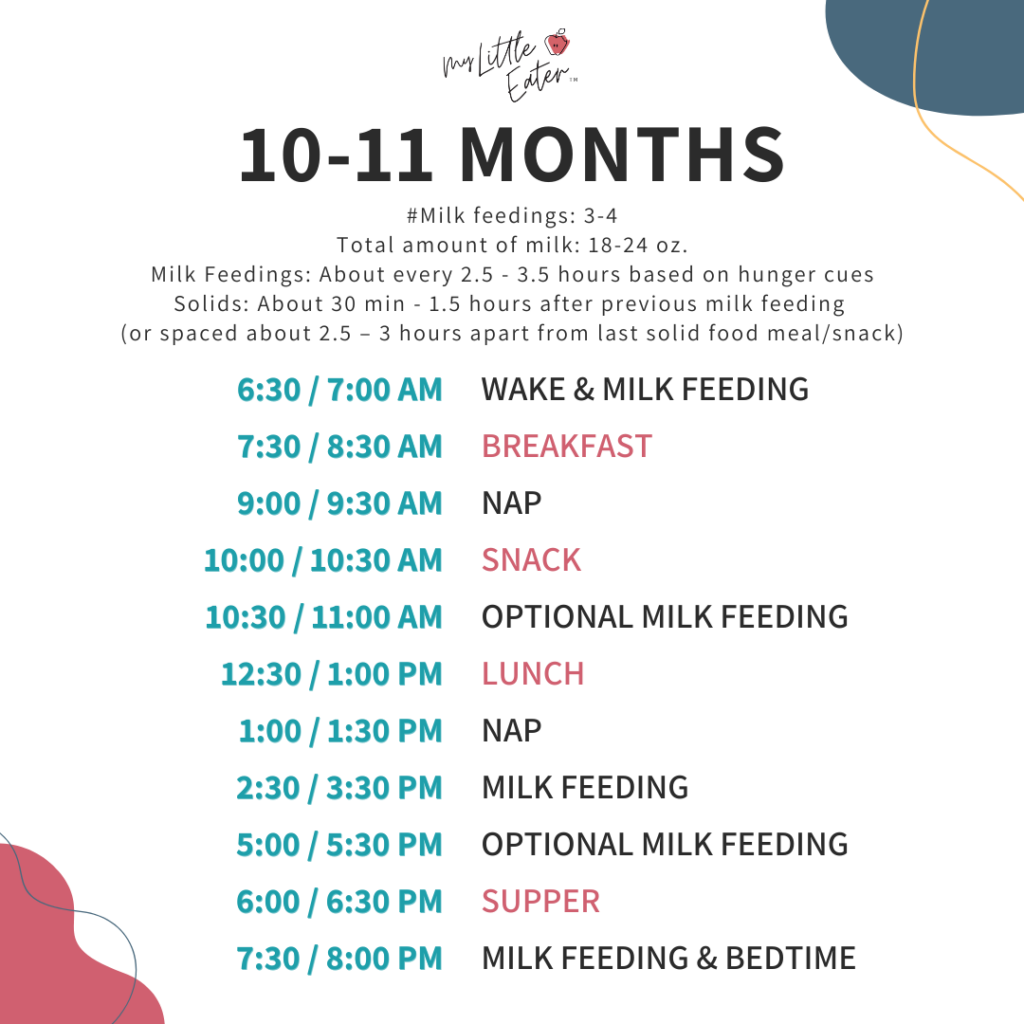
A 10 to 11 months old baby typically needs three meals and two to three snacks daily. Breast milk or formula remains essential. Offer solid foods like purees, soft fruits, and small finger foods. Maintain consistent meal and snack times for routine and digestion.
Babies aged 10 to 11 months should eat three main meals and two to three healthy snacks daily. Meals should include a balance of proteins, grains, fruits, and vegetables. This helps support growth and energy needs.
Yes, babies at 10 to 11 months can eat solid foods. Introduce soft, mashed, or finely chopped foods. Avoid choking hazards like whole nuts or hard candies. Solid foods complement breast milk or formula for nutritional balance.
A 10 to 11 months old baby typically drinks 16 to 24 ounces of breast milk or formula daily. Milk intake decreases as solid food consumption increases. Continue feeding on demand to meet hydration and nutritional needs.
Feeding a 10 to 11-month-old requires patience and care. Offer a variety of healthy foods each day. Keep meals small and frequent to match their appetite. Watch for signs of fullness and hunger. Encourage self-feeding to build independence and skills.
Stay consistent with meal times for better routine. Remember, every baby grows at their own pace. Enjoy this special time of discovery and growth. Feeding well now helps build strong habits later.


